The Future of energy at home: Solar Power – free energy from the roof + Home Batteries – storing the sunshine + Air Source Heat Pump – heating without gas + Financial/Environmental benefits
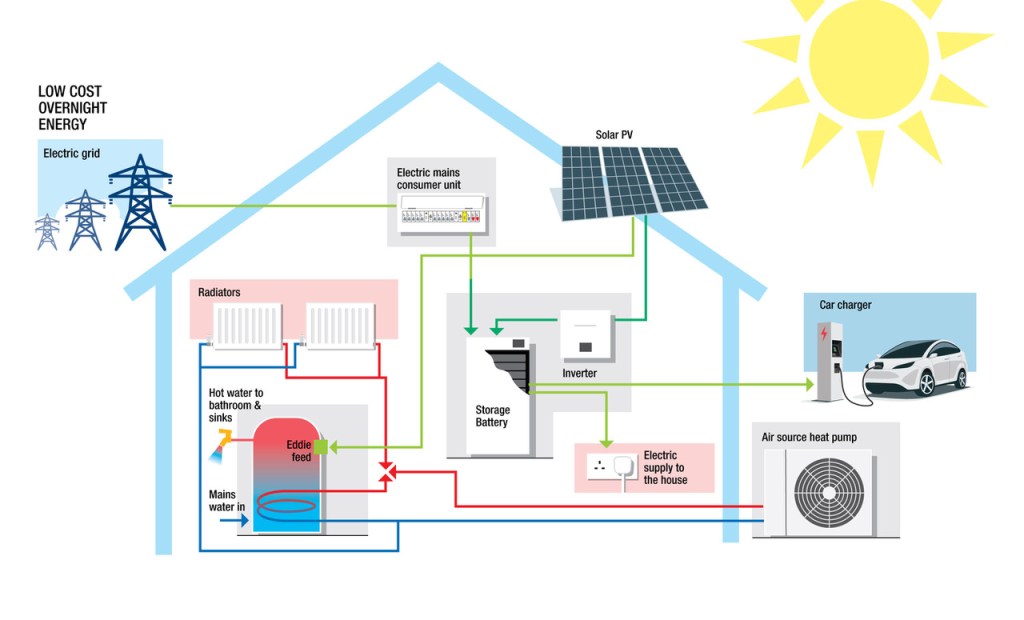
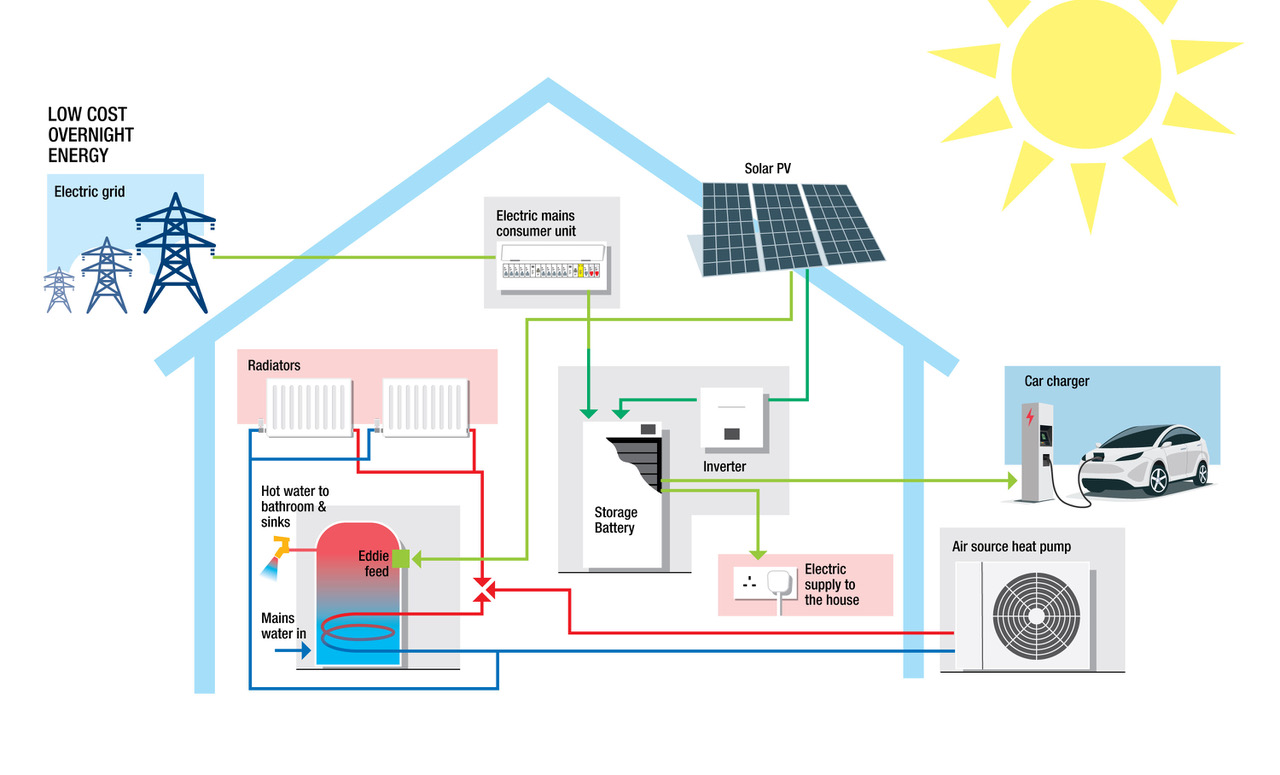
My son and I converted our house in Dorset from gas to a fully renewable package between 2022 and 2023. We now have stable low running costs. We are pleased that we are no longer pumping out millions of cubic metres of CO2 Global Warming gases anymore. The image above and at the end of this article is a diagrammatic representation of what we have installed. The installation includes solar panels, home batteries, and an air source heat pump—removing the need for gas entirely. We also have a car charger and overnight low cost electricity toping up the battery,
As energy prices rise and the climate crisis deepens, many households in England are exploring how to cut costs, reduce emissions, and secure their energy future:
- In March of this year the BBC reported that UK heat pumps installations were at a record level
- Recent Growth: Over 22,000 domestic battery systems were installed in the UK in the 12 month to March 2025.
- Over 1.5 million homes in the UK have installed solar panels, a number that has seen a significant increase in recent years. This represents a substantial portion of UK households and continues to grow as the government aims to expand solar energy capacity and households seek to reduce energy bills, according to the Energy Saving Trust.
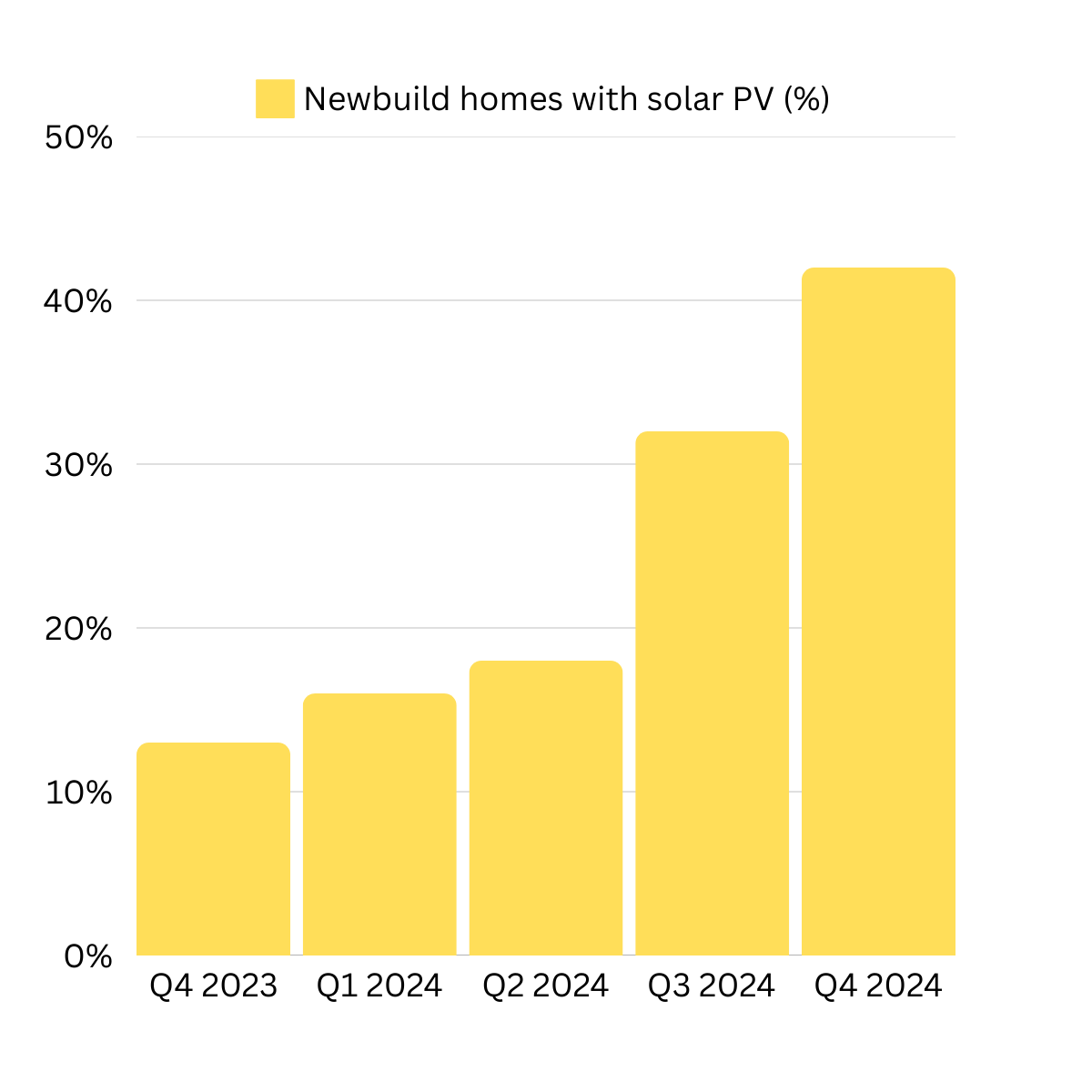
- More than four in ten new homes in England built with solar power according to Solar Energy UK
Solar Power: Free Energy From the Roof
Solar panels are now a familiar sight across the UK, but their potential is often underestimated. Even in England’s mixed climate, solar can provide a significant portion of a household’s electricity. During sunny days, panels generate more electricity than you may use, and with the right system, this surplus can be stored rather than wasted.
Home Batteries: Storing the Sunshine
This is where home battery systems, such as the Tesla Powerwall or similar, come in. Instead of exporting excess electricity back to the grid at low rates, a battery stores it for use later—whether that’s running appliances in the evening or powering the home on a cloudy day. Batteries increase self-sufficiency and cut reliance on the grid, especially useful during winter when daylight hours are short.
Air Source Heat Pump: Heating Without Gas
Replacing a gas boiler with an air source heat pump (ASHP) is the key step to going completely gas-free. An ASHP extracts heat from the outside air—even on cold days—and uses it to warm water for radiators, underfloor heating, and taps. Modern systems are highly efficient, often producing three times as much heat energy as the electricity they consume.
Financial and Environmental Benefits
- Lower bills: By generating and storing your own electricity, you reduce reliance on increasingly expensive gas and grid electricity.
- Government support: Schemes like the Boiler Upgrade Scheme (BUS) in England can reduce upfront costs of installing a heat pump.
- Carbon savings: With no gas supply and clean electricity, a household can cut its carbon footprint dramatically.
Challenges to Consider
- Upfront investment: Solar panels, batteries, and a heat pump can be costly, although long-term savings and government grants offset this.
- Home suitability: Insulation and radiator size matter. A well-insulated home makes heat pumps more effective.
- Seasonal balance: Solar is strongest in summer; pairing it with a battery helps, but winter demand may still require some grid electricity.
The Future of Energy at Home
Living without gas or oil fired central heating is no longer a futuristic idea—it’s becoming a reality for households across the UK and around the world.. With the right combination of solar, battery storage, and an air source heat pump, a home can run largely on renewable energy, cutting bills and carbon while building energy independence.
Our Renewable Energy House: